Pumping shouldn’t be confusing but insurance coverage often is. What your plan covers often depends on hidden rules, fine-print limitations, and policy details that aren’t clearly explained. These unspoken restrictions influence which breast pump you’re allowed to receive and whether you qualify for upgrades or additional benefits.
This guide breaks down the insurance factors, upgrade options, deadlines, and secondary plan advantages that most moms never hear about plus how to maximize your pump coverage with confidence. For the full picture of what else you can get free before baby arrives, see our complete guide to free baby stuff for new moms.
Quick answer: How many breast pumps will insurance cover?
Most insurance plans cover one breast pump per pregnancy, not per year and not on demand. A new pregnancy generally resets that benefit, even if your last pump is only a year or two old. Getting a second pump within the same pregnancy usually requires documented medical necessity, such as multiples or NICU care.
Before you scroll — claim the biggest freebie on this list
Your ACA insurance already covers a hospital-grade Hygeia pump. $0 out of pocket. Ships before baby arrives.
✓ Retail $259.99 — you pay $0
✓ 2 minutes. No card. No commitment.
✓ BCBS, Aetna, UHC, Cigna, Humana + 200 more
Join 250,000+ moms who paid $0 with insurance
Why Insurance Coverage Isn’t as Simple as It Sounds
Insurance plans vary widely, and each one follows its own coverage guidelines, supplier agreements, and eligibility requirements. These differences affect what pumps you’re offered and what’s kept off the list.
Most moms are offered a default pump without being shown the full list of covered models. Understanding the “fine print” ensures you receive a pump that supports your lifestyle not just the lowest-cost option.
Here's the one number most searches don't answer clearly: the large majority of insurance plans cover one breast pump per pregnancy. Multiples, documented medical necessity, or a new pregnancy resetting your benefit are the main ways that baseline changes.
Hidden Rules That Affect What Pump You Qualify For
Insurers rely on internal policies that influence approval decisions. These rules aren’t shared openly but directly affect your allowed pump selection.
The “Default Pump” Policy
Most insurers auto-assign the lowest-cost pump unless you ask for the full list of covered models. Without asking, you only see the cheapest option.
Policy Timing Requirements
Some plans authorize pumps only during a specific pregnancy window, while others require claims within 30–90 days after delivery. Missing these timing rules limits your choices.
Because most plans tie coverage to a pregnancy rather than a calendar year, a new pregnancy typically opens a fresh benefit, even if your last pump is only a year or two old. Switching insurance plans mid-pregnancy or shortly after delivery can also reset what's available, since your new insurer evaluates your claim under its own rules, not your previous plan's history.
Supplier Contract Restrictions
Insurance partners with specific DMEs (durable medical equipment suppliers). These agreements affect:
- which brands you can choose
- whether wearable pumps qualify
- which upgrades are permitted
Understanding supplier limits helps you avoid unnecessary restrictions.
Upgrade Options Your Insurance Probably Won’t Mention
Even when pumps are fully covered, insurers rarely explain available upgrade paths. These options expand your choices beyond the basic model.
Wearable or Portable Pump Upgrades
Many plans allow an upgrade to a hands-free or wearable model, like the Hygeia Esprit, with a small fee, but this option isn’t offered unless you ask.
More Advanced Electric Pump Models
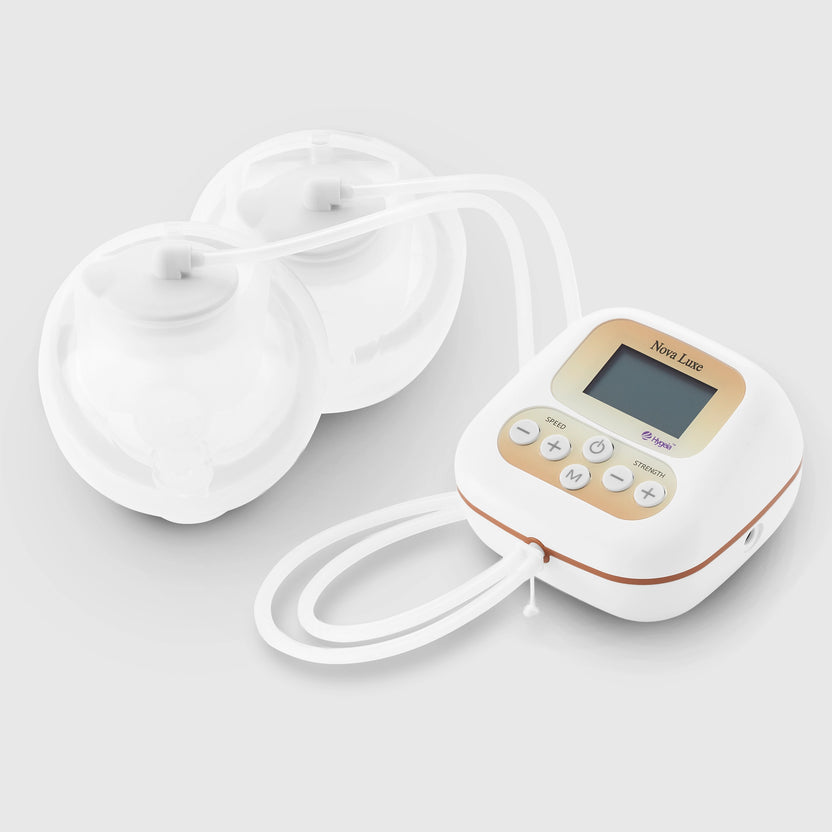
Pumps with stronger suction control, flexible rhythms, or better comfort settings, like the Hygeia Nova Luxe, may fall under partially covered upgrades.
Extra Supplies and Replacement Accessories
Your plan may also include:
- multiple flange sizes
- extra valves or membranes
- additional bottles
- covered storage bags
Most insurers won’t mention these add-ons unless requested directly. Some plans also cover postpartum recovery and maternity garments under the same DME benefit, worth asking about in the same call.
Manual-to-Electric Swaps: A Hidden Way to Maximize Coverage
Insurers often list manual pumps as fully covered, but many allow a manual-to-electric pump swap based on your feeding situation.
When You Qualify for an Electric Swap
You may be eligible for an upgraded model if:
- you are exclusively pumping
- your baby requires NICU care
- you are returning to work soon
- you have latch or supply challenges
Why This Swap Increases Your Benefits
This switch helps you access a more supportive pump, like the cordless Hygeia Fit Pro, without paying full retail maximizing the value of your insurance benefits. This same medical-necessity logic is usually how moms get a genuine second pump covered, not just an upgraded version of their first one. Outside of these situations, a second pump within the same pregnancy is typically an out-of-pocket purchase, though FSA or HSA funds can offset the cost.
Why Mothers and Experts Trust Hygeia
Celebrated by leading parenting and health organizations for innovation, efficiency, and mom-approved design.

Parents Pick Award
"Hospital-grade, cordless, hands-free pump designed for ultimate convenience and efficiency."
Mom's Choice Award
"It's cordless, rechargeable design lets you pump anytime, anywhere."

The Bump
"Best hospital-grade breast pump"

Baby Maternity
"In my humble but experienced opinion, the comparable pumps don't really compare."

The leaky Boob
"In my humble but experienced opinion, the comparable pumps don't really compare."
Pump Coverage Deadlines Most Moms Aren’t Told About
Insurance benefits include specific claim deadlines and coverage windows that determine eligibility. Missing them can reduce your available pump options.
Important Coverage Timelines
- authorization windows during pregnancy
- postpartum claim submission deadlines
- accessory renewal dates
- annual replacement part eligibility
Why These Deadlines Matter
Submitting your request early gives access to more pump choices and helps avoid delays caused by extra documentation or supplier processing times.
The Hidden Advantage of Secondary Insurance
If you have dual coverage, such as a commercial plan plus Medicaid, you may qualify for additional benefits.
How Secondary Insurance Helps
Your secondary plan may cover items your primary does not, including:
- upgraded pumps
- replacement parts
- more frequent accessory coverage
If you have two active plans, you can request a benefits check from both. It's possible, though not guaranteed, for each plan to authorize its own pump, since plans don't automatically coordinate with each other on durable medical equipment the way they sometimes do on medical claims.
What to Ask Each Insurance Plan
Request a full benefits check from both carriers. Many moms receive more complete coverage simply because they verify both plans. A covered lactation consultation can also help you figure out which pump upgrade actually fits your feeding situation before you make the request.
Tools That Help You Maximize Your Insurance Benefits
Knowing what to ask and what to clarify helps you avoid hidden limitations and secure the most supportive pump for your needs.
- Ask for the full list of covered pumps
- Request upgrade pricing before choosing a model
- Confirm the approved DME suppliers
- Check if accessories renew annually
- Verify if secondary insurance provides extra benefits
- Ask directly: "Is my breast pump benefit per pregnancy or per calendar year?"
These steps ensure you’re choosing your pump not accepting what the insurer defaults to.
FAQs: Insurance Coverage, Pump Options & Hidden Benefits
Why does insurance offer such limited pump options?
Most insurers work with contracted suppliers, limiting the models shown. Asking for the complete list expands your choices.
Can I get a wearable pump through insurance?
Often yes. Many plans allow wearable upgrades with a small fee, but only if you request the option.
What happens if I miss my eligibility window?
Some insurers won’t reopen claims after the deadline, so submitting early increases your available options.
Does secondary insurance give extra pump benefits?
Yes. Secondary plans may offer additional accessories, upgraded pumps, or more frequent replacements.
Are replacement parts covered?
Some policies offer annual or quarterly covered replacements, but they’re not automatically shipped, you must request them.
How many breast pumps will insurance cover?
Most insurance plans cover one breast pump per pregnancy. Getting more than one in the same pregnancy typically requires documented medical necessity, such as multiples or NICU care.
Will insurance cover a second breast pump?
Usually not, unless you have a documented medical reason like exclusive pumping, a NICU stay, or latch and supply challenges. Outside of those situations, a second pump in the same pregnancy is typically an out-of-pocket or FSA/HSA purchase.
How often does insurance cover a breast pump?
Once per pregnancy is the standard rule. A new pregnancy generally resets your benefit, even if your last pump is only a year or two old. Some plans reset annually instead, so it's worth asking your specific plan which rule applies.
If I switch insurance, can I get another breast pump?
Possibly. Since your new insurer evaluates your claim under its own rules rather than your previous plan's history, switching plans mid-pregnancy or shortly after delivery can open up a new benefit. Confirm directly with your new plan.
If I have two insurances, can I get two breast pumps?
It's possible, though not guaranteed. Request a full benefits check from both carriers, since plans don't automatically coordinate with each other on durable medical equipment the way they sometimes do on medical claims.
Bottom Line: Insurance Offers More Pump Benefits Than You Think
Insurance benefits can be generous, but key details are rarely explained unless you know what to ask. Understanding the hidden rules, upgrade pathways, and coverage timelines helps you choose a pump that truly supports your feeding journey.
Hygeia is committed to helping moms navigate pump coverage with clarity and confidence, making it easier to access the full benefits your insurance provides.
Insurance Plans We Work With


How to Claim Your Free Breast Pump
Complete our online insurance verification form. You will need your insurance card.
Choose your Hygeia pump from the options covered under your plan.
We handle the paperwork, verify your prescription and deliver your breast pump.
Most plans allow you to order starting at 30 weeks gestation. Order 30 to 60 days before your due date so the pump is ready before baby arrives. Check your full insurance coverage here. You can also check what free baby stuff you will get through Medicaid.