

It's 3 a.m. on day five. Your baby is feeding again, your body aches in places you didn't know could ache, and you're wondering if any of this is normal. If that sounds familiar, you're right where most new moms are in the first month postpartum, and you're not doing it wrong.
The first month postpartum is the first four weeks after birth, the opening stretch of what doctors call the fourth trimester. During these weeks your body heals from birth, your milk supply builds, and your hormones shift fast. At Hygeia, our pumps are designed by moms, for moms, and we've lived these weeks ourselves. Below, we walk through what's normal week by week, what isn't, and where to get free help.
What Happens in the First Month Postpartum?
In the first month postpartum, three things happen at once: your body heals, you and your baby learn to feed, and your emotions adjust to a huge change. Each one affects the others, so good support helps all three.
The American College of Obstetricians and Gynecologists (ACOG) recommends that every new mom have contact with her provider within the first 3 weeks after birth, and a full postpartum visit no later than 12 weeks. You don't have to wait six weeks to ask for help.
Your First Month Postpartum, Week by Week
Every recovery is a little different, so use this as a rough map.
Week 1: Rest, Bleeding and Your Milk Coming In
Your body: Expect bleeding called lochia, bright red and heavy like a heavy period. You may feel cramps called afterpains as your uterus shrinks, often stronger while you nurse. That's normal: breastfeeding releases oxytocin, which helps your uterus contract. If you had stitches or a C-section, the area will be sore.
Feeding: Your baby drinks colostrum, a small amount of thick, early milk packed with antibodies. Around days 3 to 5, your milk comes in and your breasts may feel full, firm and tender. This is engorgement. Feed often, about 8 to 12 times in 24 hours, to keep milk moving. By the end of week one, look for at least 6 wet diapers a day. For a closer look at these days, read our day-by-day guide to your first week.
Week 2: Baby Blues, Cluster Feeding and Your First Check-In
Your body: Bleeding usually gets lighter and turns pink or brown. Stitches and incisions start to feel a little better.
Feeding: Many babies go through a stretch of cluster feeding, where they want to eat over and over for hours. It can feel like you're doing something wrong. You aren't. Cluster feeding helps build your supply. By about two weeks, most babies are back to their birth weight. Sore nipples should also improve by now. If they still hurt, the latch probably needs a small fix, and a lactation consultant can help.
This is also a good week to book your check-in with your provider, so it happens within that 3-week window.
Week 3: Finding a Rhythm
Your body: You may have a bit more energy, even if you're still short on sleep. Short walks are usually fine. Skip heavy lifting, especially after a C-section. If your bleeding gets heavier after you've been active, take that as a sign to rest.
Feeding: If you're thinking ahead to bottles or going back to work, now is a good time to learn about pumping. Our guide to breast pump options walks through the main types.
Week 4: Supply Settling and Looking Ahead
Your body: For many moms, bleeding is light or nearly gone by now. Incisions and stitches feel better, though you're still healing inside. Your pelvic floor needs more time, so wait for your provider's go-ahead before exercise or sex.
Feeding: For healthy, full-term babies, breastfeeding is usually well established between 4 and 6 weeks. Your supply starts to match your baby's needs more closely, so your breasts may feel softer. That doesn't mean you're losing milk. Curious what's typical? See our post on normal pumping output.
Healing After a Vaginal Birth vs a C-Section
A C-section is major surgery, so recovery usually takes longer and comes with more limits. Your provider sets your own timeline, but here's how the two often compare.
|
Area |
Vaginal birth |
C-section |
|---|---|---|
|
Main pain |
Perineum, stitches from a tear or episiotomy, afterpains |
Incision site, belly muscles, afterpains |
|
Hospital stay |
Usually shorter |
Usually a few days longer |
|
Bleeding (lochia) |
Yes, for several weeks |
Yes, for several weeks |
|
Lifting and driving |
Fewer limits; ask your provider |
Stricter limits; nothing heavier than your baby until cleared |
|
Comfortable feeding positions |
Most positions; side-lying helps with perineal pain |
Football hold or side-lying keep weight off the incision |
Need more ideas? Our post on breastfeeding positions for comfort shows each hold step by step.
Breastfeeding the First Month: Is My Baby Getting Enough?
The best signs that your baby is getting enough milk are wet diapers, weight gain and how often they feed.
|
What to check |
What's typical |
|---|---|
|
Feeds |
About 8 to 12 times in 24 hours |
|
Milk coming in |
Around days 3 to 5 |
|
Wet diapers |
At least 6 a day by the end of week one |
|
Weight |
Back to birth weight by about 2 weeks |
|
Nipple soreness |
Should ease by about 2 weeks |
If your baby falls short on any of these, call your pediatrician. Most early feeding problems come down to latch. These posts can help:
You can also track feeds and diapers in the free Hygeia Baby app, to share real numbers at checkups.
When to Start Pumping in the First Month
If breastfeeding is going well and your baby is gaining weight, you can usually wait to pump until your supply settles around 4 to 6 weeks. Some moms need to start much sooner. Here's how to decide.
Start pumping now if:
-
Your baby is premature or in the NICU
-
Your baby can't latch well yet, or feeding is very painful
-
You and your baby are apart for long stretches
-
Your pediatrician has asked you to supplement for weight gain
-
You're going back to work before 6 weeks
Wait a few weeks if:
-
Your baby latches well and feeds comfortably
-
Diapers and weight gain are on track
Going back to work? Start pumping about 2 to 3 weeks before your first day. Our guide to pumping at work covers the rest. NICU moms can find more help in our post on NICU breastfeeding.
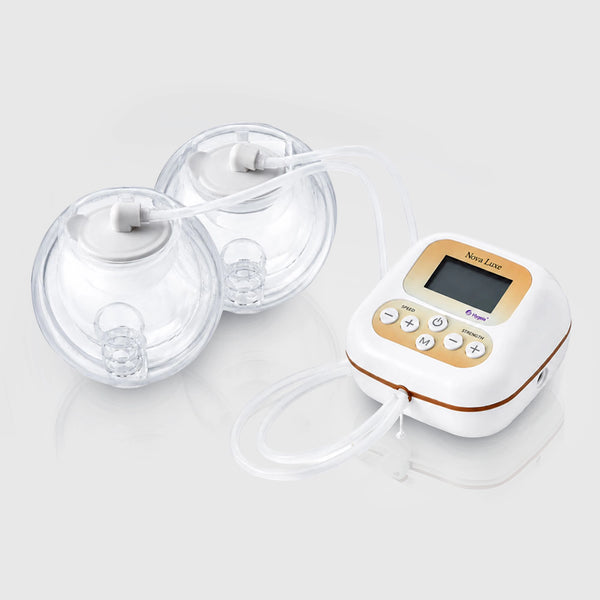
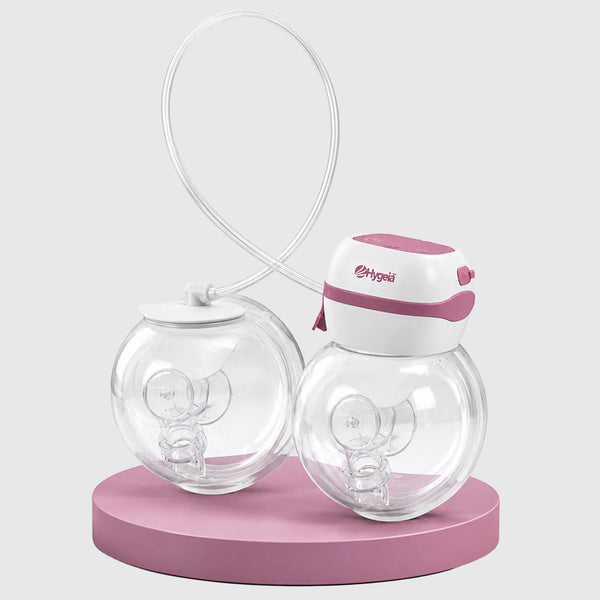
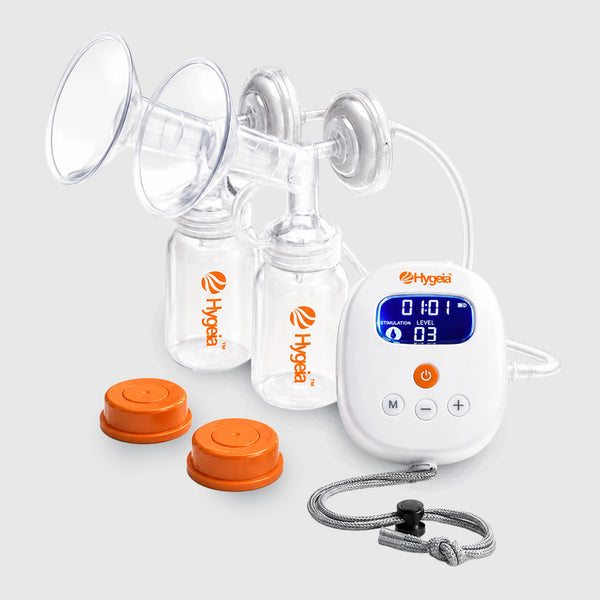
Every Hygeia personal-use pump gives you hospital-grade performance. The Hygeia Express is a hands-free wearable under a pound with 275 mmHg of suction. The Nova Luxe suits moms who want a full-power pump at home, and the Fit Pro is a cordless option with dual-phase suction. Check your flange size first, since the right fit makes pumping more comfortable.
Baby Blues or Postpartum Depression?
Baby blues are short and common. Postpartum depression lasts longer and feels heavier. Up to 4 in 5 new moms get the baby blues: mood swings, tears, worry and trouble sleeping. They usually start a few days after birth and fade within 10 to 14 days.
Postpartum depression affects about 1 in 7 moms. The sadness, anxiety or numbness doesn't lift after two weeks. Some moms mostly feel constant worry, which is postpartum anxiety.
Neither one is a personal failure, and both are treatable. If your low mood lasts past two weeks, tell your provider. You can also call or text the National Maternal Mental Health Hotline at 1-833-TLC-MAMA (1-833-852-6262), any time, day or night. If you have thoughts of harming yourself or your baby, call or text 988 or go to the nearest emergency room. Our post on postpartum mental health lists more places to find support.
Urgent Maternal Warning Signs After Birth
The CDC's Hear Her campaign lists these urgent maternal warning signs for the year after birth. If you have any of them, get care immediately. Call 911 if the symptom is severe or you can't get to care safely.
-
Headache that won't go away or gets worse over time
-
Dizziness or fainting
-
Changes in your vision
-
Fever of 100.4°F or higher
-
Extreme swelling of your hands or face
-
Thoughts about harming yourself or your baby
-
Trouble breathing
-
Chest pain or fast-beating heart
-
Severe nausea and throwing up
-
Severe belly pain that doesn't go away
-
Vaginal bleeding or discharge after pregnancy
-
Severe swelling, redness or pain of your leg or arm
-
Overwhelming tiredness
Tell them you gave birth recently. If you're not sure a symptom is serious, call your provider and ask.
Build Your First-Month Postpartum Support Plan
Set up help before you need it, ideally before birth or in your first days home.
-
Claim your insurance-covered pump. Under the Affordable Care Act (ACA), most health plans cover a breast pump, and most of our moms pay little or nothing out of pocket. Check your insurance eligibility in a few minutes.
-
Book a lactation visit early. Through our partner Nest Collaborative, you can see an International Board Certified Lactation Consultant (IBCLC) by video. These visits are covered by insurance. Book one in week 1 or 2, before small problems grow.
-
Schedule your 3-week check-in. Call your provider's office now so your first contact happens within 3 weeks of birth.
-
Download the Hygeia Baby app. Track feeds, diapers and pumping sessions in one place, free.
-
Give your partner a job list. Meals, laundry, diaper changes and night shifts all count. Share the warning signs list with them too.
When to call a lactation consultant vs troubleshoot at home
Try home fixes for mild tenderness in the first few days or short-term fullness. Book a lactation consultation if nipple pain lasts past the first week or two, your nipples crack or bleed, your baby misses the diaper or weight checks, or you're thinking about stopping because it hurts.
What to Expect by the End of Month One
By day 30, most moms notice real progress. Bleeding is lighter or gone, feeding feels more familiar, and you know your baby's cues better.
Your pelvic floor, energy, periods and return to exercise keep changing for months. Your full postpartum visit, no later than 12 weeks after birth, is the time to talk through all of it.
Frequently Asked Questions
What should I expect in the first month postpartum?
In the first month postpartum, expect bleeding that slowly lightens, soreness that eases week by week, frequent feeds and very little sleep. Your milk comes in around days 3 to 5 and starts to settle around 4 to 6 weeks. Mood swings are common in the first two weeks.
How long does postpartum bleeding last?
Postpartum bleeding, called lochia, usually lasts several weeks. It starts bright red and heavy, then turns pink or brown, and then lightens to a yellowish-white. If bleeding suddenly gets heavier, you pass large clots or you feel dizzy, call your provider right away.
Is it normal to cry every day in the first month postpartum?
Crying often in the first two weeks is common and is part of the baby blues, which affect up to 4 in 5 new moms. Baby blues usually fade within 10 to 14 days. If you still feel sad, anxious or numb after two weeks, tell your provider, because it may be postpartum depression, which is treatable.
How do I know my baby is getting enough breast milk in the first month?
Check three things: feeds, diapers and weight. Most newborns feed 8 to 12 times a day, have at least 6 wet diapers a day by the end of week one, and get back to birth weight by about 2 weeks. If any of these fall short, call your pediatrician or book a lactation visit.
When should I start pumping after birth?
If breastfeeding is going well, most moms can wait until supply settles around 4 to 6 weeks. Start sooner if your baby is in the NICU, can't latch well, needs extra milk, or you return to work early. If you're going back to work, start pumping 2 to 3 weeks before your first day.
When should I see my doctor after giving birth?
ACOG recommends contact with your provider within the first 3 weeks after birth and a full postpartum visit no later than 12 weeks. Get care right away for any urgent maternal warning sign, such as a severe headache, chest pain or trouble breathing.
Does insurance cover a breast pump and lactation help?
Yes, under the Affordable Care Act most health plans cover a breast pump and breastfeeding support. Most Hygeia moms pay little or nothing out of pocket for their pump. Virtual IBCLC visits through Nest Collaborative are also covered.
Get Through Your First Month Postpartum With Real Support
The first month postpartum asks a lot of you, often on a few hours of sleep. Moms Deserve More: clear answers, tools that work and people in your corner. That's why every Hygeia pump gives hospital-grade performance at home.
Moms have chosen Hygeia as their top breast pump for 10 years running, and they've rated us 4.9 out of 5 across more than 2,887 reviews. Check your insurance eligibility to get your Hygeia pump at little or no cost, and book a lactation consultation with an IBCLC through Nest Collaborative