

At some point in the second trimester you can no longer button your favorite jeans and your lower back starts to complain by late afternoon. You go looking for help and find two products with nearly the same name. Which one you need comes down to one question: do you need help with your clothes, or with your body?
We’re Hygeia Health, a team of moms who make products for moms. We’ll give it to you straight, including when you don’t need either one.
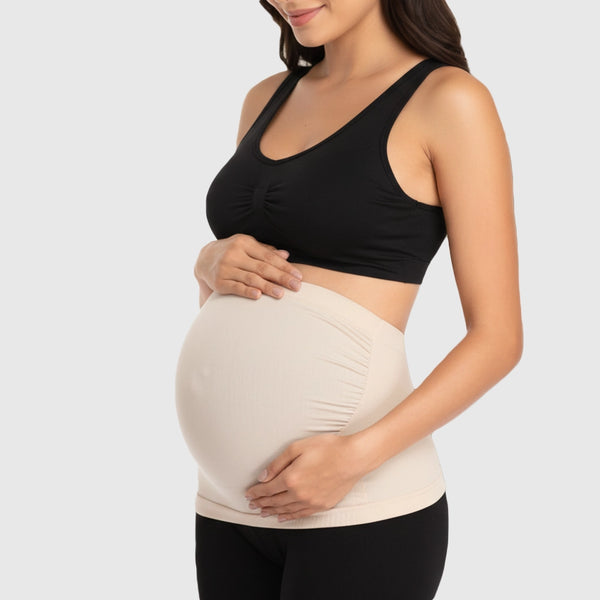
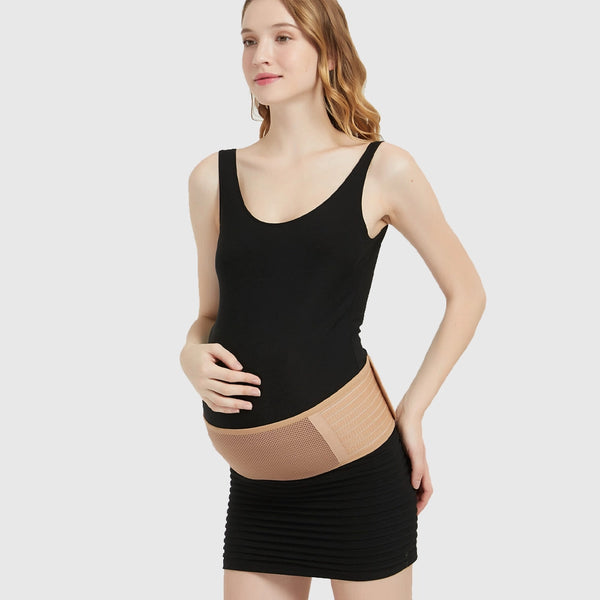
Belly band vs. maternity belt, defined: A belly band is a soft stretchy fabric band that you wear around your midsection. It gives a light squeeze and covers your unbuttoned pants so you can wear your regular clothes longer. A maternity belt (also known as a maternity support belt or belly belt) is a firmer, adjustable garment that sits under your bump and wraps around your lower back. It takes some of your belly’s weight off your back and pelvis.
Belly Band vs. Maternity Belt at a Glance
A belly band helps with your clothes and adds gentle support. A maternity belt helps with pain. If you feel good, a band is usually enough. If your back or pelvis hurts, you’ll probably want the belt.
|
Feature |
Belly band |
Maternity belt |
|
Main job |
Covers unbuttoned pants and adds light compression |
Lifts the belly and supports the lower back and pelvis |
|
Build |
Stretchy knit, pull-on or self-fastening |
Firmer back panel with adjustable straps |
|
Support level |
Light |
Moderate to firm |
|
Best timing |
Late first trimester through mid-pregnancy, plus after birth |
Second and third trimesters |
|
Best for |
Outgrowing your pants, mild achiness, layering |
Low back pain, pelvic girdle pain, round ligament pain, a heavy or low bump |
|
Typical wear time |
Longer stretches are usually fine because the compression is light |
Common advice is 2 to 3 hours at a time |
|
Hygeia option |
Belly Band Pack (M, L, XL), $54.99 |
Maternity Belt Pack (Regular and XL), $69.99 |
What a Belly Band Does
A belly band is mainly a wardrobe tool, with a bit of comfort on the side. You pull it over the waistband of your pre-pregnancy pants, leave the button undone and the band holds everything in place while it covers the gap.
That buys you weeks before you need a full maternity wardrobe. The light compression also feels good when your bump first starts to show, and it smooths the line under fitted tops. It won't fix real pain, though. If your back hurts after a short walk, a soft band probably won't help much.
Belly band benefits
-
Keeps your regular pants wearable for longer
-
Covers your skin when shirts ride up over your bump
-
Gives light, even compression that many moms find soothing
-
Works after birth too, for coverage while nursing and gentle hold as your belly shrinks
What a Maternity Belt Does
A maternity belt is a support tool. It sits low, under your bump, and wraps around your lower back. When you fasten it, it lifts some of your belly's weight and spreads the load across your hips and back.
Your center of gravity moves forward as your baby grows, and many moms lean back to balance. That puts extra strain on the lower back. Pregnancy hormones also loosen the ligaments around your pelvis to prepare for birth. A belt adds outside stability while your body goes through those changes.
Types of maternity support belts
-
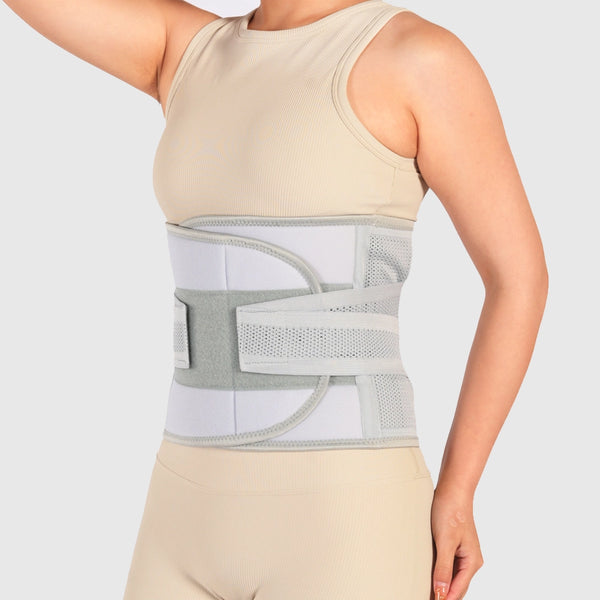
Standard support belt: A wide back panel with a front strap under the belly. It's the usual pick for general low back pain. Our Maternity Belt Pack is this type.
-
Sacroiliac (SI) belt: A narrow, firm belt worn low around the hips. It targets pelvic girdle pain and pubic bone pain rather than lifting the belly.
-
Maternity cradle: A belt with extra straps over the bump or across the upper back. Moms carrying twins or a very heavy third-trimester belly often use one.
Belly Band vs. Maternity Belt: When to Choose Each
Pick based on what's bothering you. How many weeks along you are matters less.
Choose a belly band if
-
Your main problem is pants that won't button
-
You feel fine and want a little gentle hold
-
You aren't ready to buy a full maternity wardrobe
-
You want something discreet under work clothes
Choose a maternity belt if
-
Your lower back aches after standing, walking, or chores
-
You feel pain at the back of your pelvis or the front of your pubic bone when you walk or climb stairs
-
You get sharp twinges along the sides of your belly (round ligament pain)
-
You're carrying low, carrying twins, or working on your feet all day
When you might want both
Plenty of moms use both. The band handles clothing every day, and the belt comes out for the grocery run, the commute, or a long shift. They do different jobs, so one doesn't replace the other.
When you need neither
If you feel comfortable and your clothes still fit, skip both. A healthy pregnancy doesn't require a support garment.
What Research Says About Maternity Support Belts
Research shows maternity belts can ease pain a little, but the effect is modest and the studies are small.
-
About 1 in 5 women have pelvic girdle pain during pregnancy, according to the UK's National Institute for Health and Care Excellence (NICE).
-
A 2018 study of 90 women in the Journal of Biomechanics found that a maternity support belt slightly improved posture in all three trimesters (Bey et al.).
-
A 2024 systematic review of flexible pelvic belts found that several trials reported less pain with a belt than with usual care. Rigid and flexible belts gave similar results (Bidari et al., Iranian Rehabilitation Journal).
-
A 2025 meta-analysis in Midwifery pooled 7 studies. It found modest pain relief and little change in daily function, and it rated the evidence as low to very low quality.
Belly bands have almost no research behind them, which makes sense for a clothing helper with light compression. Think of a belt as one tool. It works best alongside safe pregnancy exercise, rest, and physical therapy.
How Long Should You Wear a Maternity Belt or Belly Band?
Most guidance says to wear a firm maternity belt for 2 to 3 hours at a time, then take a break. You can usually wear a light belly band for longer, since its compression is gentle.
The time limit comes from a concern that your core muscles could start to rely on outside support. Experts don't fully agree on this. Hinge Health's physical therapy team cites a 2017 systematic review and says support garments won't weaken your muscles even with long wear. Many manufacturers and parenting sites still recommend the 2 to 3 hour rule.
We suggest starting with 2 to 3 hours during your busiest stretches, like errands, a commute, or time on your feet. Pair the belt with core and pelvic floor exercises your provider approves. Take it off when you sit for a long time and when you sleep.
How to Put On a Maternity Belt
-
Stand tall. Keep your back straight and let your belly relax.
-
Place the back panel low. Center the wide panel across your lower back, just above your hips.
-
Bring the front under your bump. The front band should sit below your belly, at the top of your pelvis, never across the middle of your bump.
-
Lift and fasten. Gently lift your belly with one hand and fasten the belt with the other so it takes some of the weight.
-
Check the fit. You should breathe, sit, and walk easily. It should feel like a firm hug. If it pinches, digs in, or leaves deep marks, loosen it.
If a belt makes your pain worse, stop wearing it. Physical therapists treat extra pain in a belt as a sign that it's the wrong type or the wrong fit for you.
How to Pick Your Size
Start with your pre-pregnancy clothing size, then plan to size up as your bump grows.
-
Belly band: If you wore S or M before pregnancy, start with Medium. If you wore L or XL, start with Large. Many moms move up a size around months 5 to 6. A good fit is snug, with room to slide one finger under the band.
-
Maternity belt: Regular fits most moms who wore M or L before pregnancy, and many stay in it the whole time. XL suits larger frames, and some moms switch to it around months 7 to 8. If Regular feels loose, try XL.
Both of our packs include more than one size, so you won't need to reorder mid-pregnancy. You'll find the full sizing details on the Belly Band Pack and Maternity Belt Pack pages.
What to Expect Trimester by Trimester
First trimester (weeks 1 to 13)
Most moms don't need support yet. A belly band helps once your waistband starts to feel snug, which for many moms happens near the end of this trimester.
Second trimester (weeks 14 to 27)
This is when most moms start. Your bump grows fast, your posture shifts, and back or round ligament pain often shows up. Many moms add a maternity belt between weeks 20 and 24, though some need one sooner.
Third trimester (weeks 28 to 40)
Belts do the most work now. Your belly is at its heaviest and pelvic pain often peaks. It's also time to check your size, because a belt that fit at 24 weeks may feel tight at 34. Add your band or belt to your hospital bag checklist too, since some moms like the support on the ride home.
After birth
A soft band gives you coverage while nursing and light hold as your belly shrinks. For firmer recovery support, especially after a C-section, ask your provider about a compression garment first. Our guide to postpartum compression garments covers the options.
When to Call Your Provider First
Ask your OB or midwife before you start any support garment. Call sooner if you notice any of these:
-
Pain that's sharp, severe, or getting worse
-
Pain along with bleeding, leaking fluid, fever, or regular tightening
-
Pelvic pain that makes it hard to walk, roll over in bed, or stand on one leg
-
Numbness, tingling, or swelling that gets worse when you wear a belt
A pelvic floor physical therapist can also tell you whether you need a belt at all, and which type fits your symptoms.
Hygeia Belly Bands and Maternity Belts
We design our maternity garments the same way we design our breast pumps: by moms, for moms.
Hygeia Belly Band Pack
You get three self-fastening bands in Medium, Large, and Extra Large, so the fit grows with your bump. Each band is 94% nylon and 6% spandex, thin enough to sit smoothly under work clothes. The Belly Band Pack costs $54.99 with free shipping and a 1-year warranty.
Hygeia Maternity Belt Pack
You get two adjustable belts, Regular and XL, made from breathable 3D air mesh for belly and lower back support. A double-layer locking edge helps the belt stay in place while you move. The Maternity Belt Pack costs $69.99 with free shipping, 30-day returns, and a 1-year warranty.
Both packs are FSA and HSA eligible, so you may be able to pay with pre-tax dollars. Check with your plan administrator to confirm. You can browse everything in our maternity garments collection.
Check your breast pump coverage while you plan
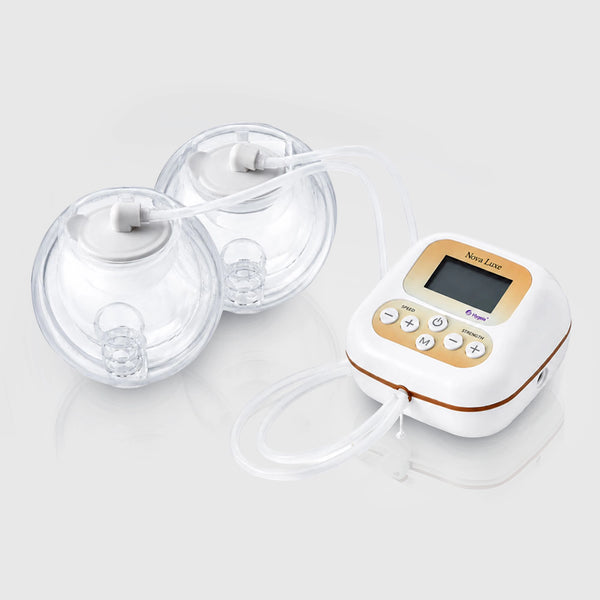
Insurance rarely covers a support belt unless your doctor prescribes one. Your breast pump is a different story. The Affordable Care Act requires most health plans to cover a breast pump, and most moms get a hospital-grade Hygeia pump for $0 out-of-pocket. We handle the insurance paperwork for you.
Hygeia has been a top breast pump choice for 10 years, and moms rate us 4.9 out of 5 across more than 2,887 reviews. After your baby arrives, our free Hygeia Baby app helps you track feeds and pumping sessions. If you need help, you can book virtual lactation visits with IBCLCs from Nest Collaborative, covered by insurance.
Frequently Asked Questions
Is a belly band the same as a maternity belt?
No. A belly band is a soft, stretchy layer for clothing coverage and light compression. A maternity belt is firmer and adjustable, and it lifts your belly to ease back and pelvic strain. Some brands use the names loosely, so check how the product is built before you buy.
When should I start wearing a belly band during pregnancy?
Start when your regular pants stop fitting comfortably, often late in the first trimester or early in the second. There's no set week. A belly band is mostly about comfort and clothing, so you can begin as soon as it helps.
When should I start wearing a maternity belt?
Most moms start a maternity belt in the second trimester, often between weeks 20 and 24, when back or pelvic pain shows up. Some need one sooner, and some never need one. Let your symptoms guide you, and talk to your provider first.
Can a maternity belt hurt my baby?
A well-fitted maternity belt is generally considered safe for most pregnancies, but it should never feel tight. Research reviews have reported occasional side effects such as skin irritation, discomfort, and increased pain. Ask your provider before you start, and take the belt off if anything feels wrong.
Can I sleep in a maternity belt?
Most guidance says no. Firm belts are meant for active hours like walking, standing, and chores. At night, a pregnancy pillow under your bump and between your knees usually gives better support.
Do belly bands help with back pain?
A belly band may ease mild aches thanks to its light compression, but it isn't built for real back pain. If your back hurts most days, a maternity belt with a firm back panel and an under-belly strap usually does more. Pain that keeps coming back is worth raising with your provider or a physical therapist.
Can I wear a belly band after pregnancy?
Yes. Many moms wear a belly band after birth for coverage while nursing and light support as the belly shrinks. For firmer recovery support, especially after a C-section, ask your provider about a postpartum compression garment.
Choose the Support That Fits Your Pregnancy
If your clothes are the problem, get a belly band. If your back or pelvis hurts, get a maternity belt. If you feel good, you don't need either one yet. Your body will tell you when that changes.
Shop the Hygeia Belly Band Pack or the Maternity Belt Pack for the support you need right now. Then check your insurance eligibility for a hospital-grade breast pump, so it's ready before your baby arrives. Moms deserve more, and that includes a comfortable pregnancy.