Will my baby be all right? Will there be long term damage? Could I have prevented this? When can I hold my baby? It can be an endless cycle of questions and concerns when a mother’s baby is admitted to the Neonatal Intensive Care Unit (NICU). It is often an unexpected and overwhelming experience that can leave even the most dedicated mothers questioning how a NICU breastfeeding journey can proceed.
In an environment filled with monitors and medical teams, providing breast milk is one of the most significant ways a mother can contribute to her baby’s recovery. Breast milk is often called the first medicine for a NICU baby because it provides unique antibodies and nutrition tailored to their specific needs.
Achieving a successful breastfeeding relationship in the NICU requires a different approach than a typical postpartum experience. Here is the best advice for navigating this journey with confidence.
Start Expression as Soon as Possible to Build Supply
First, don’t panic. Even if your baby is unable to nurse yet, you can take action. The first few hours and days are critical for establishing a long term milk supply. Begin expressing milk within six hours of birth, focusing on colostrum. This thick, gold liquid is concentrated with immune-protective properties.
Hand expression is often more effective than a pump for collecting these small, potent amounts of colostrum. Once your milk begins to transition, moving to a hospital grade breast pump is the best way to signal your body to produce more.
Mimic the Newborn Rhythm
A baby in the NICU cannot tell you when they are hungry, so you must rely on a strict schedule to get your body in a rhythm of production. To build a robust supply, aim to pump eight to ten times in a twenty-four hour period. This includes at least one session during the night when your prolactin levels are naturally higher. It can help to label the time pumped on any stored milk.
Consistency is more important than the length of each session. Pumping for fifteen to twenty minutes every three hours mimics the natural feeding pattern of a healthy newborn. This frequent removal of milk tells your body that your baby is growing and needs more nourishment.
Prioritize Kangaroo Care
Skin-to-skin contact, also known as Kangaroo Care, is one of the most powerful tools for a NICU mother. When you hold your baby against your bare chest, your body releases oxytocin. This hormone is responsible for the let-down reflex and directly impacts your milk production.
Kangaroo Care also helps your body identify the specific pathogens your baby is facing. Your body then creates targeted antibodies in your milk to help your baby fight those infections. Even if your baby cannot nurse yet, holding them close will boost your supply and improve their stability.
Use the Right Equipment
In the NICU, your breast pump becomes your baby’s surrogate. You need a pump that is powerful enough to establish a supply without the stimulation of a nursing infant. A hospital grade breast pump, like the Hygeia Express, is designed for this purpose exactly.
Having a reliable pump at home allows you to maintain your schedule and provide the nutrition your baby needs to grow strong enough to come home. Hygeia is committed to supporting NICU families through every step of the journey. Because most insurance plans cover the cost of a high quality breast pump, making it free to you, Hygeia helps mothers check their insurance coverage and apply for their free breast pump. Get the tools you need to support your baby’s breastfeeding journey.
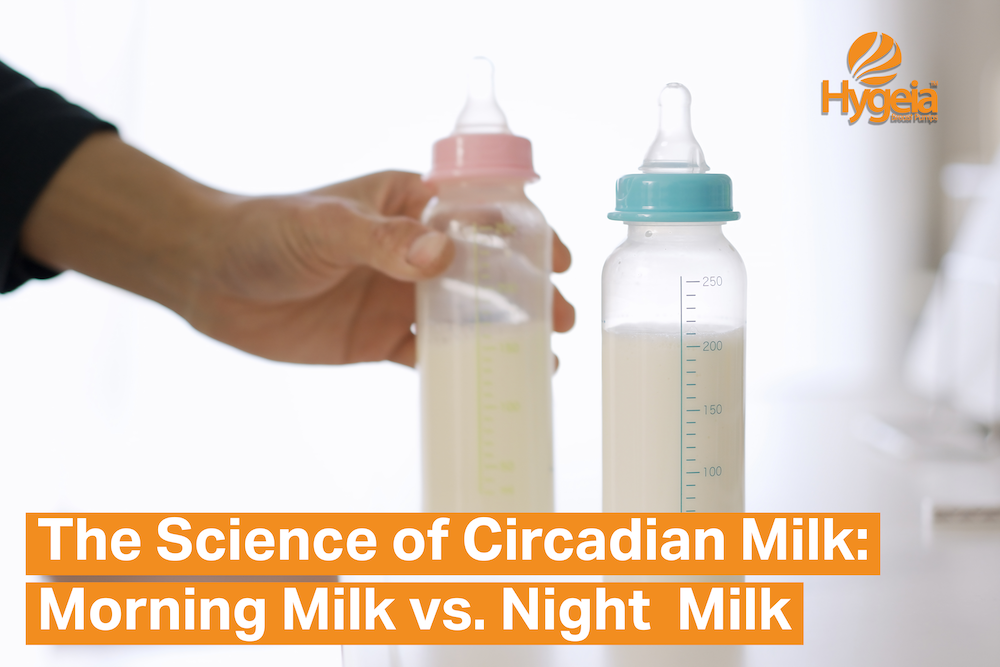
Breast milk is often described as a living substance because it constantly changes to meet the needs of a baby. One of the most fascinating ways it adapts is through the time of day. Research shows that the composition of your milk follows a circadian rhythm. This means the milk you produce at noon is biologically different from the milk you produce at midnight.
Understanding these differences can help you support your baby’s sleep patterns and manage your pumping routine more effectively.
Morning Milk: Energy and Alertness
In the early morning hours, usually starting around 6 a.m., your body increases the production of specific hormones and amino acids. Morning milk is typically high in cortisol. This is a hormone that promotes alertness and helps the baby wake up.
Mothers often notice that their milk volume is highest during this first pumping session of the day. This milk tends to be higher in water content. This provides essential hydration to your baby after a long night. These components act as a biological wake-up call. Because babies are not born with their own established circadian rhythms, they rely on these cues from your milk to learn the difference between day and night.
Night Milk: Sleep and Relaxation
As the sun sets, the profile of your breast milk shifts significantly. Night milk contains high levels of melatonin and tryptophan. Melatonin is a hormone that induces sleep and helps regulate the internal clock. Tryptophan is an amino acid that the body uses to produce serotonin, which aids in relaxation and sleep quality.
Beyond hormones, the physical makeup of the milk changes too. Evening milk is often higher in fat and has a creamier consistency than morning milk. This higher fat content provides more calories per ounce, which helps your baby feel full and satisfied for longer periods. Levels of melatonin in breast milk typically peak around midnight to encourage longer sleep stretches.
The Impact on Your Pumping Routine
For mothers who pump, this biological clock has practical implications. Many parents find success by labeling their milk bags with the time of day the milk was expressed. By feeding “night milk” during evening or nighttime feedings, you ensure your baby receives the natural sleep aids your body intended for that hour.
Consistency is helpful. If you are building a freezer stash, try to match the milk to the time of day your baby will consume it. This small adjustment can lead to better rest for both the mother and the infant.
How Hygeia Health Supports Your Journey
Building a stash of day and night milk requires a reliable and efficient breast pump. At Hygeia Health, we specialize in high quality hospital grade breast pumps designed to mimic the natural nursing rhythm of a baby. A powerful, portable pump allows you to maintain your supply and capture these vital hormonal shifts regardless of your schedule.
Our pumps, such as the Hygeia Express, provide the strength needed to express milk quickly and comfortably. This is especially important for mothers balancing work or a busy home life.
Get Your Free Breast Pump
Every mother deserves access to the best technology for her breastfeeding journey. Most insurance plans cover the cost of a hospital grade breast pump at no cost to you. Check your coverage and apply for a 100% insurance-covered breast pump. Hygeia Health will help you navigate the science of motherhood with confidence.
Most conversations about breastfeeding focus on the health of the baby. We often hear about antibodies and nutrition. While those factors are vital, a significant new study highlights how breastfeeding serves the mother as well. Research recently published in the British Medical Journal (BMJ) suggests that breastfeeding may offer long term protection against depression and anxiety for mothers.
This discovery marks a turning point in maternal health. While the early days of nursing can be a challenge, science shows that the effort invested today could benefit mental well-being for a decade or more.
The Study: A Decade of Data on Maternal Health
The study followed a group of 10,000 mothers mothers in Ireland over a ten year period. Researchers looked at the relationship between breastfeeding habits and later instances of depression and anxiety. The findings were clear. Mothers who breastfed for longer durations showed a lower risk of developing these mental health struggles ten years later.
Researchers followed these women from the time their children were nine months old until they reached the age of thirteen. By using validated tools like the Patient Health Questionnaire and the Generalised Anxiety Disorder scale, the study provided a clear look at maternal mental health over a decade.
The Results: Breastfeeding Supports Mental Wellness
The findings showed a significant link between breastfeeding and reduced psychological distress. Mothers who initiated breastfeeding were less likely to report high levels of depression and anxiety ten years later compared to those who did not. The most protective effects were found in mothers who breastfed for six months or longer.
Crucially, these results remained consistent even after researchers adjusted for other factors. They accounted for maternal education, family income, smoking habits, and even the mother’s mental health history prior to the study. This suggests that the act of breastfeeding itself creates a unique, lasting benefit for the maternal brain.
This study is a prospective observational study. This means it tracked real life outcomes over a long period. It provides a deeper look than short term research. It suggests that the hormonal and emotional shifts that occur during breastfeeding have a lasting impact on the maternal brain.
Make It Make Sense: What’s Breastfeeding’s Role?
The connection between nursing and mental wellness is rooted in biology. The process of breastfeeding or pumping releases oxytocin. This hormone helps reduce stress and promotes a sense of calm. These repeated hormonal shifts help the body manage cortisol, the primary stress hormone.
The study indicates that these benefits do not disappear once the baby is weaned. Instead, the process of breastfeeding appears to help regulate the maternal nervous system in a way that provides lasting resilience. Choosing to breastfeed is an investment in long-term health and happiness for the mother.
Supporting the Journey with Effective Tools
Maintaining a breastfeeding routine is not always easy. Many mothers return to work or face challenges with their milk supply. To reap the long term benefits identified in this study, you need a support system that works for your lifestyle. A high quality breast pump is a crucial part of that system.
At Hygeia Health, we specialize in hospital grade breast pumps designed to mimic the natural rhythm of a baby. Hygeia’s pumps, like the Hygeia Express, help you maintain your supply efficiently. This allows you to continue providing breast milk even when you are away from your baby. When you have the right tools, reaching your breastfeeding goals becomes much more manageable.
Secure a Pump to Begin Your Journey
Your mental health matters just as much as your baby’s nutrition. We want to help you achieve the long term wellness benefits highlighted in the latest research. Most insurance plans cover the cost of a high quality breast pump at no cost to you.
Let Hygeia check your insurance coverage and apply for a 100% insurance-covered breast pump today. Hygeia Health can support your journey toward a healthier and more confident future.

As a mother, you likely treat every ounce of your breast milk like the precious resource it is. Traditional storage usually involves a refrigerator or a freezer. However, a new trend is gaining popularity: freeze-dried breast milk. You might wonder if this process is safe for your baby and what the potential drawbacks might be.
This blog post will provide you with the facts. Understanding both the benefits and the risks of freeze-drying can help you decide if it is the right choice for your family.
What is Freeze-Drying?
Freeze-drying, also known as lyophilization, is a process that removes water from breast milk. The milk is first frozen at an extremely low temperature. Then, it is placed in a vacuum where the ice turns directly into vapor. What remains is a fine powder that can be stored at room temperature for up to three years.
Because freeze-drying relies on cold temperatures and a vacuum rather than high heat, the proteins and vitamins in your milk remain largely intact.
The Biggest Risks of Freeze-Dried Breast Milk
While the process is generally safe when performed by professionals, there are specific risks that parents should consider before sending their milk off to be processed.
Contamination Risks: The biggest concern is the environment where the milk is processed. If a facility does not follow medical-grade sterilization protocols, bacteria can be introduced into the powder. It is vital to use a service that tests for heavy metals and microbial activity.
Loss of Live Components: While vitamins and minerals are stable, freeze-drying can reduce the levels of live cells and certain antibodies. Fresh or frozen milk contains more “living” immune-protective components than the powdered version.
Reconstitution Errors: When you turn the powder back into liquid, the ratio of water to milk must be exact. If you use too much water, your baby will not get enough calories. If you use too little, it can put a strain on your baby’s kidneys and digestive system.
Home Processing Dangers: Some companies sell home freeze-drying kits. These are often difficult to keep sterile and may not reach the temperatures required to safely preserve human milk. Professional services are much safer.
Why Moms Choose Freeze-Drying
Despite the risks, the convenience of freeze-drying is a major draw for busy mothers. It solves several common problems. You can reclaim your freezer space by replacing bulky milk bags with compact pouches. It is also a favorite for traveling mothers. You do not need to worry about dry ice or finding a freezer at a hotel.
The Importance of Quality Expression
Whether you plan to freeze your milk or have it freeze-dried, the process begins with effective milk expression. To build a sufficient stash, you need a reliable, efficient pump that mimics your baby’s natural rhythm.
At Hygeia Health, we specialize in high quality, hospital grade breast pumps. These tools help you maximize your milk production while ensuring your comfort. Having the right pump makes it much easier to collect enough milk for long-term storage or specialized processing.
We are here to support your breastfeeding journey. Most insurance plans cover the cost of a high quality breast pump at no cost to you. Check your insurance coverage and apply for a breast pump today that is 100% covered. Let us help you provide the best nutrition for your baby with the most advanced tools available.
2025 was a landmark year for mothers and their babies. There were several significant shifts in how society supports breastfeeding. Breakthroughs ranged from new federal laws to scientific discoveries. This year was about more than just headlines. It was about real progress in the rights and resources available to mothers. Whether it was a viral moment that sparked a national conversation or a major research study on the benefits of human milk, 2025 kept a focus on the strength and resilience of nursing mothers.
Here is Hygeia’s roundup of the most impactful stories and wins from the past twelve months.
Legal & Policy Breakthroughs
The BABES Enhancement Act Signed into Law
In November, the Bottles and Breastfeeding Equipment Screening (BABES) Enhancement Act was signed. It mandates that the TSA provide enforceable, hygienic guidance for handling breast milk and pumping equipment at airports.
The NEST Act Introduction
The Newborns Essentials Support Toolkit (NEST) Act was introduced in the House to fund “newborn supply kits”. This includes breastfeeding supplies specifically for families in maternal health deserts and rural areas.
Lactation Spaces for Veteran Moms Act
This bipartisan bill gained traction in late 2025. It aims to ensure all VA medical centers provide private, hygienic spaces for nursing veterans and employees.
Scientific Discoveries & Research
The “Circadian Milk” Study
A Rutgers study published in Frontiers in Nutrition (Sept 2025) revealed that breast milk’s composition changes drastically throughout a 24-hour cycle. Melatonin peaks at midnight to aid sleep, while cortisol peaks at 6 a.m. to support alertness.
Ig Nobel Prize for Garlic Milk
Researchers won the 2025 Ig Nobel Prize for a study proving baby’s preference for flavored milk. The study showed that infants suckle longer when milk is flavored by garlic from the mother’s diet, debunking the myth that “bland is better.”
NICU Milestone
As of November 2025, over 55% of U.S. Level III and IV NICUs have officially transitioned to an “Exclusive Human Milk Diet” (EHMD). This means they use 100% breastmilk-based fortifiers instead of cow-milk alternatives.
Viral & News Headlines
FEMA Emergency Planning Update
In a win for advocates, FEMA updated its 2025 guidelines to explicitly include breastfeeding supplies and donor milk in federal emergency preparedness and disaster response plans.
The “Morning vs. Night” Milk Labeling Trend
Following the Rutgers research, a viral TikTok trend saw thousands of “pumping moms” color-coding their milk storage bags (yellow for day, blue for night) to help babies regulate their sleep schedules.
Public Pumping and Breastfeeding Incidents
Mother’s shamed for public breastfeeding or pumping created backlash for businesses but support for mothers In November, Aris Smith Kopiec went viral on Instagram after being kicked out of a Georgia restaurant for breastfeeding at the table. The incident sparked protests and a “nurse-in” at the location. Meanwhile, mother of twins, Dr. Elise Turner, was asked to leave a business class lounge for pumping under her shirt. The story made international headlines, forcing a public apology from the Virgin Australia airline.
Celebrity & Pop Culture Moments
Claudia Oshry sparked a massive online discussion in December about the safety and ethics of returning to weight-loss medications (like Ozempic/Wegovy) immediately after finishing her breastfeeding journey. Megan Fox and MGK welcomed their daughter, Saga Blade, and Fox’s aesthetic social media posts featured her nursing journey, helping keep the conversation around “natural parenting” trending.
Gisele Bündchen and Rihanna both welcomed their third child and continue to advocate for breastfeeding and natural parenting, while first time parents Pete Davidson and Elsie Hewitt opened up about their breastfeeding journey.
Hygeia Expands support for mothers
At Hygeia Health, we remain dedicated to providing the high-quality tools you need to provide for your baby with confidence. To better support you, we proudly expanded our offerings in 2025 launching our new maternity garment line. These pieces are designed with comfort and style in mind. They are aimed at helping mothers feel supported from pregnancy through postpartum.
Hygeia’s primary focus continues to be helping mothers access a high quality breast pump covered 100% by insurance. We believe that every mother deserves the best technology available, and we work hard to make the application process simple and accessible.
As 2025 comes to a close, it is clear that the landscape for breastfeeding and pumping mothers is stronger than ever. As we move into a new year, Hygeia Health remains your partner in health and motherhood. We are here to help you every step of the way and plan to continue expanding the ways we support you in 2026.